The Myth of Overpopulation

Posted: 5 June 2013

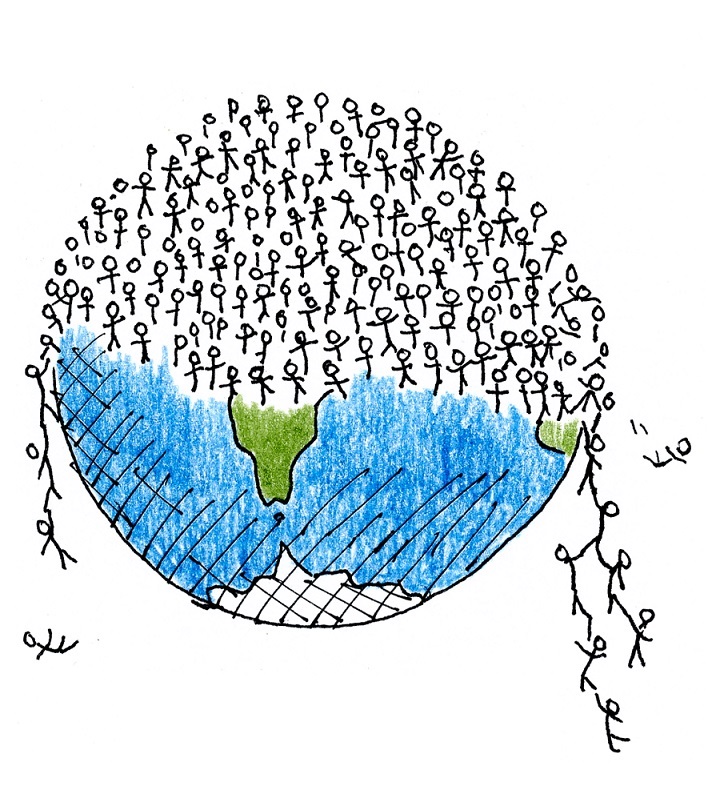
overpopulation PicAustralia recently welcomed its 23 millionth citizen. Of course we do not know who this person is exactly but they are out there somewhere. The person may have been a new born baby or possibly an immigrant who relocated to call Australia home. The news reports generally seemed to have been positive, or at least neutral, about our growing population numbers, which are still rather small compared to other nations. The same positivity was certainly not present when the global population ticked over to seven billion in early 2012. At that time there were renewed warnings from some quarters that earth could no longer continue with so many humans moving in.

Talk of overpopulation is nothing new. One of the foundational works on the subject was published in 1798 by an English Vicar named Thomas Malthus. Malthus believed that unchecked population growth would lead to a reduced standard of living and he actually advocated the death of poorer members of society so that those of a higher social status would not starve. Malthus predicted that society was about to reach a point where the planet would no longer be able to produce enough food causing worldwide starvation. Although his predictions of a global meltdown never came true, Malthus is still cited as an authoritative reference for those who advocate the forced curbing of population growth.

What Malthus could not have envisaged was the way that the industrial revolution would so impact the ability of man to produce food. Both of the world’s leading authorities on food distribution today are very clear that there is enough food for everyone on the planet. The United Nations Food and Agricultural Organisation states the problem quite simply, “the world currently produces enough food for everybody, but many people do not have access to it”. In other words poverty stemming from a lack of food should not exist. Thanks to modern methods of farming, the world is producing hundreds of millions of tonnes more food each year on less land than was used thirty years ago. Just because the world has a greed and distribution problem though does not mean that the world has a population problem.

If we actually do some simple math on the question of population it may surprise you to know that the entire population of the planet could fit into the state of Queensland with plenty of room. Queensland is approximately 1.7 million square kilometres, or 1700 billion square metres. If this figure is divided by the current population of 7.1 billion every individual person would have 239 square metres for themselves. And if we further acknowledge that many of these people would live as families in common houses, there would be enough space for everyone to live comfortably in a full sized house with a large backyard. Now of course if that was to happen the state of Queensland would require much new infrastructure but the point of the example is that there is plenty of room on planet earth for all of us and more. It is true that our cities are overcrowded but that is because humans are of their nature communal beings. We like living in close proximity to others so the fact that the main roads are crowded each morning does not mean that forcing families to have less children will solve the problem. More likely, cities will always be congested and there will be a greater need for government to support the growth of new regional centres.

The reality is that more serious than any overpopulation problem is the global shrinking birth rate. To simply replace ourselves each childbearing woman must have 2.1 children however as of 2010 about 48% of the world’s nations have sub-replacement fertility levels. Virtually every European nation as well as Japan, Russia and Australia are not having enough children to replace their ageing populations. Some countries are now seeing the need to pay subsidies to couples who have more than two children.

It is wrong to think that people only consume resources and destroy nature. People are the world’s greatest asset because each new life offers a potential creativity and giftedness that did not exist before. More people do not equal greater poverty, on the contrary, it is the enlarging of community and the building up of nations that offer the greatest opportunities for people to live happy and successful lives. Overpopulation has always been, and remains, a myth perpetuated by ignorance, greed and fear.

Leave a Reply

There is only one morality…is it yours?

Posted: 2 March 2013

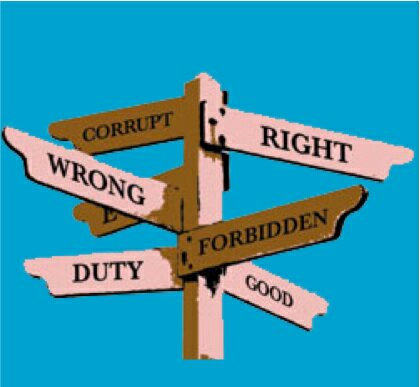
Morality2I was having a conversation with someone the other day and the topic turned briefly to politics. In discussing the various political parties I made the comment that while I don’t have any favoured political party, I would vote for a party on the basis of their stance on moral issues e.g. abortion, same-sex ‘marriage’ etc. After all, if a political party doesn’t understand the nature of marriage or respect the value of human life, I don’t really care how wonderful their economic policy might be. The person I was speaking with, who was also a person of the Christian faith, thought that to vote that way might be good for me, but it was not something that could or should be practiced by those who have no faith. This person believed it was better to encourage people to focus on issues we held in common such as the value of education and the importance of good healthcare.

This got me thinking, are moral issues private issues? Are my beliefs in particular key issues of morality dependent on my belief in a Supreme Being and adherence to a religious system? There are plenty of faithful and well meaning people out there who live by a strong moral code and are probably unable to annunciate any reason for their choices apart from their religion. Of course if someone decides to live an upright life because their faith encourages them to do so that is fantastic. However, it seems to me that we really need to be able to give better reason for living a certain way than because ‘God says’. I am not meaning to lessen the importance of God, but in a secular state God does not feature highly, and there is a growing secular movement hinging its success on telling people that certain aspects of morality are specific to religion and therefore not applicable to a large portion of society. If they are correct, if abortion is only a problem for the Pope, and if marriage between a man and a woman is just a venerable tradition, then it is true that believers have no right to encourage their chosen morality upon those who do not share their faith. But what if they are wrong?

This notion of morality needing religion is a commonly held thought out in the marketplace amongst people of faith or of none, but when one stops to think about it, it does not make sense. Morality does not rely on religion for its validity anymore than I feed myself daily because the law says that suicide is wrong. I look after my life (and respect the lives of others) because it is the right and proper thing to do; because I innately identify that life has some sort of value. I do not need a law to tell me that killing is wrong. Similarly, morality is not a set of rules that religions have come up with to either burden or bring joy to their adherents. Religions promote morality because a moral life is the behaviour proper to human beings. Morality is not right because religion says so; religion says morality is right because it is.

It is no coincidence that the bulk of the Ten Commandments of the Judeo Christian faiths form the basis of every developed legal system in the world. A government cannot, for example, decide to hold an election to see if its citizens would like to legalise murder and theft. A government exists to encourage and ensure that right and proper models of behaviour are lived out among its citizens. And the Latin root of the word ‘moral’ means just that – the proper behaviour of a person in society. Even the definition implies that this behaviour is something that is self-evident.

Of course the reason that secularists do not like talking about a moral code being ‘normal’ or ‘self-evident’ is because it leads to questions about how humans have an innate sense that some things are more right than others. If the thought is progressed far enough eventually the matter of God comes up, and those who don’t want to have anything to do with greater being become somewhat frustrated. While we do not necessarily need to take a conversation that far it is imperative that those we come in contact with leave us simply understanding that morality is good for the human person, any human person, and if something moral is worth its weight then it transcends all religion and is common to us all.

Comments are closed.

Is truth possible?

Posted: 5 August 2012

what is truth

I was filling in an online form recently and the security question at the end was “2+9=” and I had to type in the answer to submit the page. I found it interesting that this very mainstream form on the website of this very mainstream company was not only telling me that there was objective truth but that they actually knew what it was! If I had tried to type in that 2+9=5 I would have been told I was wrong. No message was going to appear and tell me that while they respected my freedom to believe that 2+9=5 they preferred the response to be eleven. The message would very simply say, ‘Incorrect, try again’.

I found this small incident amusing because for the most part we exist in a ‘truth free’ society where definitive statements are not welcome. Our society does of course acknowledge right and wrong but these are mostly understood to be established by the Parliament and upheld by the police. Something that is ‘right’ today can be declared ‘wrong’ tomorrow by a simple legislative adjustment. People have lost the idea that there is a genuine reality that is bigger than the law. To declare that something is right or wrong is very different to stating that something is true or untrue.

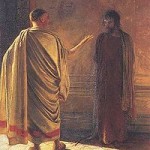
The debate over the possibility of truth is not a new phenomenon. Two thousand years ago Pontius Pilate, Prefect of the Province of the Roman Empire in Judea, had a man brought before him who claimed to bear witness to truth. Pilate is recorded as famously asking this Jesus figure, Quid est veritas, what is truth? Perhaps Pilate was genuinely asking for a response or perhaps he was stating that there was no such reality as truth. Either way, Pilate had his particular version of truth and so the rest of the story to do with Jesus is as they say…history.

Before being elected as Pope Benedict XVI, Joseph Ratzinger once stated that “Truth is not determined by the majority vote”. In other words, even if the entire world legislated and believed that 2+9=5 they would quite simply be wrong. The belief that real truth exists is the belief that there is a reality bigger than our ability to perceive or understand it.

You might have heard someone say ‘that is your truth’ or ‘this is my truth’ but we should not allow such a statement to pass unchallenged. If something is true then by its very nature it must be true for everyone. Either the words you are reading now are truly here or they are not. Their existence does not depend on you having seen or read them. We really have only two choices then: to acknowledge that some definitive truth can exist, or, to state that the idea of truth is impossible.

We live in a society that desires to create reality in response to what the majority vote wants. Euthanasia is good if enough people say it is. Same sex marriage is real if enough people say it is. Drugs can be legalised if enough people want it. Our moral and ethical code becomes not something that we strive for to make ourselves better people, but rather something that is adjusted to where we feel comfortable.

In all this, what is legal becomes the mark for what is moral and that is a dangerous path to trod. If the measure of right and wrong (and thus the standard of ‘truth’) is in the hands of a person or a political party then the only standard they have is themselves. And that has been the way on for every dictator from Julius Caesar to Pol Pot to Slobodan Milosevic. It is easy to find a very long list of dictators ranging from the benevolent to the inhumane but they share in common the notion that their truth is the truth.

When we as a ‘modern’ society decided that it would be better to live with our personal truths instead of under the one truth, we may not have realised that we handed over to anyone who wanted to take it the ideas of right and wrong. Genuine happiness however is not to be found in creating our own realities and labeling them as a truth. Happiness comes in discovering what is the truth and living our lives in accordance with that. After all, two plus nine will always equal eleven whether we like it or not.

Comments are closed.

Science vs Religion…Why the Battle?

Posted: 29 January 2012

touchingthevoid4601

The other night I was watching a TV documentary on the ‘debate’ between intelligent design and evolution. The program captured the turmoil in 2005 that tore apart the community of Dover, Pennsylvania in a battle over teaching evolution in public schools. A pointless debate if ever I heard one…allow me to explain.

The debate around creation vs evolution did not begin in Dover, Pennsylvania; in part we could trace it back to Rene Descartes, the 17th century French philosopher who is famous for his phrase “I think therefore I am”. Descartes posited that all we could really know was in the mind and his legacy was a split between the physical world and the spiritual world. Prior to this type of thinking, people understood the supernatural to be more real than the physical space they inhabited.

The other split that began just before Descartes was the Protestant Reformation. The reformers who objected to the doctrines and structure of the Catholic Church held as their foundation principle that of sola scriptura – Bible alone. No longer would all of Christianity believe that the bible should be interpreted by the Church (which actually compiled the book) but rather it would become something that could allegedly be perfectly interpreted by anyone who wanted to read it. This individualistic reading of the bible divorced from Sacred Tradition led to a literal fundamentalism among some of the Protestant denominations (and this is where the good people of Dover fit in).

These splits in the world of philosophy and religion contributed to the 18th century ‘Age of Enlightenment’ where the world was to finally cast off the infantile belief in God and see in a new era based on science and intellectual interchange. “God is dead” is a widely quoted statement that came out of that same period. (Never mind that some of the most foundational scientific discoveries were made by Catholic clergy!)

The end result has been that many, if not most people in the modern world see a split between body and soul, faith and reason, scripture and tradition, science and God. These splits have seeped into the consciousness of many Catholics even though the Catholic Church has proclaimed over and over the unity of all these aspects. Too many people now think that all Christianity is Protestant Fundamentalism. Too many Catholics disregard their faith because they think that they have to choose between science and religion.

The reality is though that science and faith are two sides of the one coin; they are both looking to discover the truth. Science can do a great many things. Science is able able to clone sheep and grow embryos in petri dishes. What science is unable to do is consider whether or not these things should be done. Science does not consider the morality of its actions. Similarly, faith can do a great many things. Faith is able to lead a person to understand their deepest desires and emotions for love and truth. Whereas science tells us what we are, faith tells us who we are. One cannot exist without the other. When science tries to play God it oversteps its boundaries. When faith tries to play science it oversteps its boundaries.

The Catechism of the Catholic Church makes the point well, “There can never be any real discrepancy between faith and reason. Since the same God who reveals mysteries and infuses faith has bestowed the light of reason on the human mind, God cannot deny himself, nor can truth ever contradict truth. Consequently, methodical research in all branches of knowledge, provided it is carried out in a truly scientific manner and does not override moral laws, can never conflict with the faith, because the things of the world and the things of faith derive from the same God” (Paragraph 159).

Ahh, the joy of Catholicism…faith and reason! So if science tells me that the world is 3.7 billion years old, who am I to argue with that?! Even Pope John Paul II publically stated that there was no in principle conflict between evolution and the doctrine of the faith, and he was not the first Pope to do that. Those who believe that the bible is a geology text book have gravely misunderstood the bible. Someone needed to tell the folk of Dover that scientific evolution does not do away with the need for God. They would have done the school children a much better service to not set one against the other. I fear all they achieved was another generation that will reject religion because of a false dichotomy.

Comments are closed.

Consultation did Marriage no good at all

Posted: 25 September 2011

5627271

Late last year Greens MP Adam Bandt put a motion into Federal Parliament that politicians seek out the views of their constituents in regards same-sex marriage. That motion was passed and MPs spent this year in “consultation mode” until last month when the period of official consultation ended. The position of Bandt and the Greens party in relation to same-sex marriage is of course well known. The consolation was really designed to create a bit of a smoke screen and advance the cause of same-sex marriage one step further. Besides the fact that numerous MPs disliked the idea of being told by the new kid on the parliamentary block how to do their jobs (as if they never consulted their constituents), in my mind the “consultation” process was a floored one from the beginning.

We live in a democratic nation and while that is a great blessing, it can lead us as citizens in that democracy to believe that our ability to decide on questions of ethics and morality is also a democratic right. If you walk outside now and ask the first ten people you see if the aforementioned consolation process was a good idea (regardless of their position on the issue) you would without a doubt get a very high ‘yes’ rating. If you pushed further about why those people believed it was a good idea you would likely get responses revolving around the ideas of democracy, freedom, listening to all opinions, majority consensus etc. Now that is all good and well if we are deciding on day-to-day matters of regulation and law, but for us to think that we can vote in the meaning of marriage in the same way that we vote in the Prime Minister is a misunderstanding of the “freedom” of true democracy.

Freedom is one of the most misunderstood words in modern language. We commonly perceive freedom to be the ability to do as we please, and to some extent that is true. Freedom does allow us the privilege to choose the direction we will walk, to decide the shape of our lives. However, as we all know, our freedom is not absolute, in fact, when you break it down we are not very free at all. You did not choose when or where you would be born. You did not choose your family. Your initial attitudes to the world when you were young are most often shaped by your parents and their personal attitudes. So while human persons crave freedom above all else, we exist with the tension of only a partial freedom.

True freedom though will always be a preeminent good because it is what allows us to be great sinners or great saints. Freedom is of course God’s gift to mankind and He will never impinge upon our personal freedom. That being said, there are some choices that we are simply not free to make. If we recall the story of our first parents in the Garden of Eden we will recall the tree of the knowledge of good and evil that was planted in the centre of the Garden. The man and the woman were “free” to eat from any tree in the garden but that particular tree they were not even permitted to touch. The deep truth hidden in this story speaks to us very much of freedom. It tells us that even though we have the ability to choose subjectively in our lives whether we should walk left or walk right, we do not have the ability to objectively declare that left will now be right and right will now be left. We can choose to share or to steal but we cannot decide that stealing will be a virtue and sharing will be a sin. The essence of morality has been planted within us, just like the tree in the garden.

The first man and woman misused their freedom because they attempted to do something they could not do and that was to reach out and take the fruit of the tree of the knowledge of good and evil. Each person since has been given the same freedom, we can choose to obey or disobey but we should not be so foolhardy to think that we can create our own realities. The job of government is not to create new realities, it is to help and assist people to choose good realities. When government takes it upon itself to “decide” the definition of marriage it is overstepping its boundary, it is failing to realise that we are not our own gods. Putting forward a consolation about an issue such as marriage has only served to further confuse people into believing that their freedom is much greater than it actually is.

Comments are closed.

Un-married – There’s no Such Thing

Posted: 25 September 2011

divorce-decree

It was recently reported that Hollywood actress Liz Hurley had been granted a divorce from her husband, Arun Nayar. The report stated that the divorce was number 17 on a list of 28 couples being granted “quickie divorces” that day. We have become so used to our near 50% divorce rate, and celebrities who have made divorce and remarriage an art form, that sometimes it needs to be stated quite clearly: divorce makes a mockery of marriage and it actually makes no sense.

Divorce is an unnatural reality that has been sold as a normal and necessary part of life. I must emphasise here that this is not a criticism of any person who has sought a divorce but rather a brief consideration of the concept of divorce. Marriage, the commitment of one man and one woman united as husband and wife, is as old as humanity. Marriage is not the invention or the property of Church or State. The Church, following Christ, raised marriage to the level of a Sacrament. The State, desiring good social cohesion, regulates marriage. Neither can control what marriage is. Marriage can no more be adjusted to unite two men than it could be adjusted to exclude fidelity from the vows. What makes marriage something is that it is not everything, it has parameters.

Divorce, on the other hand, is certainly a man-made invention. And it must rank as one of the most foolish ideas we have come up with. Foolish, because divorce attempts to change reality, attempting to say that what did exist, no longer exists. The concept of divorce is synonymous to the way that we might decide that instead of two and two totalling four, it should now total five. To do such a thing would be illogical, it would go against truth. I am looking out the window right now and it is raining. Would it make a difference to the reality if I was to declare that the rain was instead a fine sunny day? No. Because the rain is the reality; it’s not my reality, it is the reality.

When a couple marries, they publicly make free vows to enter into a life-long and exclusive relationship. Would the State ratify a marriage if the bride turned up with two grooms or if the groom only wanted to sign up to marriage for five years? It would be impossible to sanction such a ‘marriage’. Yet, in a bizarre and nonsensical twist, a man and woman who have vowed to enter into marriage and have had that marriage ratified, can turn around in five months, five years or 25 years and request that the State no longer see them as married. How is this possible? When a couple is married, they are married. One cannot un-marry. Just as I cannot eat my lunch and then un-eat it. What is consumed has been consumed. And then as if that is not illogical enough, once ‘un-married’, the parties involved can find another person they wish to marry and the State will allow them to declare vows of permanency once again.

Now there may be reasons that a couple can no longer live together in marriage, they may need to physically separate and seek out some sort of civil declaration of separation for the good of children etc. This, however, is very different to the State declaring that their marriage no longer exists. There are some realities that are beyond human manipulation. Mathematics and marriage are two of those realities. Two and two always equal four and a validly contracted marriage remains a validly contracted marriage.

There are instances when people appear to make vows to marry and yet it becomes obvious later on that they were not able to properly make those vows. Perhaps they were coerced or perhaps they had no genuine intention to honestly keep the vows. In that case, there has been no objective marriage even though they may have cut a very nice cake and danced the bridal waltz. Those examples form the work of the Catholic Church’s marriage tribunals which examine the actual validity of a marriage if it is called into question. The work of the tribunals, however, is completely different to the State declaring that a marriage was existent but now is not.

This is the reason that the Catholic Church cannot not recognise divorce; it makes no sense, and it makes even less sense to un-marry someone and then have them re-marry. The Church is the servant of reality; she is the servant of the truth. Pontius Pilate said to Christ before he had Him condemned Quid Est Veritas, what is truth? Pilate was not asking a genuine question as much stating that truth was what he would declare it to be. It seems in regards to divorce, society joins Pilate in also declaring what truth will be.

Comments are closed.

Choosing Religion, Buffet-style

Posted: 22 September 2011

religions button cafepress_com

I recently went away to a monastery for a time of silent retreat. As there were a few other people staying at the same time, there were brief conversations shared during meals.

On one of the evenings we were having dinner, Darren, who had just arrived for a “getaway”, was proceeding to tell us a little about himself. Darren was a young man in his mid-30s, the sort of guy you would not want to get on the wrong side of, well built with tattoos down both arms but a genuinely kind man. He was sharing how he was fascinated by different religions and loved to learn about what different faiths believe.

One of my fellow retreatants asked Darren what religion he was, to which he replied that he was a “Buddhist Jew”. Now, of course, there is no official religion of Jewish Buddhists and I would be willing to wager that Darren was officially neither a Jew nor a Buddhist. It was far more likely that his name was scribed into the baptismal register of the local Protestant denomination as a child but that he was not actively raised in any faith.

I am certainly not out to condemn this chap, though. He is no doubt responding to the movements of God in his life and as, St Edith Stein beautifully said, “All who seek truth seek God, whether this is clear to them or not”. I will be looking forward to being reunited with Darren at the ‘eschatological banquet’ (to quote a scripture professor I know).

The whole matter raised in my mind, though, the growing trend of buffet-style religion. It is the notion that one is able to wander down the shopping aisle of faith and select those elements one feels most comfortable with at that particular moment in time. Now granted, Buddhism would probably not have such a problem with this concept but Buddhism is more of a philosophy than a religion. The world’s major religions though, Judaism, Islam and Christianity, certainly do have an issue with the ‘pick and choose’ mentality because they do not consider religion is simply about whichever path one prefers to use in climbing the mountain of eternity.

Speaking from a Christian perspective, Jesus is not called ‘Jesus Christ’ because His surname was ‘Christ’ but because Christ means Messiah and that is what Jesus claimed to be. The Gospels cite Jesus referring to Himself as “the way, the truth and the life”. You would have noticed that Jesus used the definitive article, the. Not merely a nice guy, or a social liberator, Jesus claimed to be the true God. That statement made by Jesus leads us to two possible conclusions, (1) He is wrong; which means He is a liar and quite possibly a madman and we should have no part of Him or Christianity, or, (2) He is exactly who He says He is; the Son of God who was born of a virgin, who preached about eternity, established a Church on the rock of Peter, died on a cross, rose again and ascended into heaven. We must choose between one option or the other, liar or God; it is impossible for there to be a middle ground.

It is from this standpoint that Christianity, and specifically Catholicism, states that she possesses the fullness of truth. There is, of course, no shortage of people out there who will say that it is sheer arrogance for anyone to state that they offer the fullness of truth, but think about it; if Jesus is really who He said He was and if the Gospels really contain the story of His life, what else is Christianity going to say, indeed what else can she say?
There will continue to be many good people like Darren who begin the journey (or live the entire journey) taking a little from column A and a little from column B, seeing Jesus as a good man but not being able to take the next step in proclaiming with the Apostle Thomas, “my Lord and my God”. Thankfully, we know that God leads all people to Himself and will always bless a heart that is responding to truth, beauty and goodness in the best way it can. Living our own faith with surety and making genuine friendships with those around us is another way to share the great joy of faith.
Far from arrogance, Christianity calls us to the greatest mystery and reality that we will ever know. Each of us is completely free to choose what we will believe but at some point a genuine choice must be made. Happiness cannot be found in the shopping aisles of faith. Eventually we must take it all or leave it all.

Comments are closed.