Why is the Catholic Church against IVF?

Posted: 5 May 2013

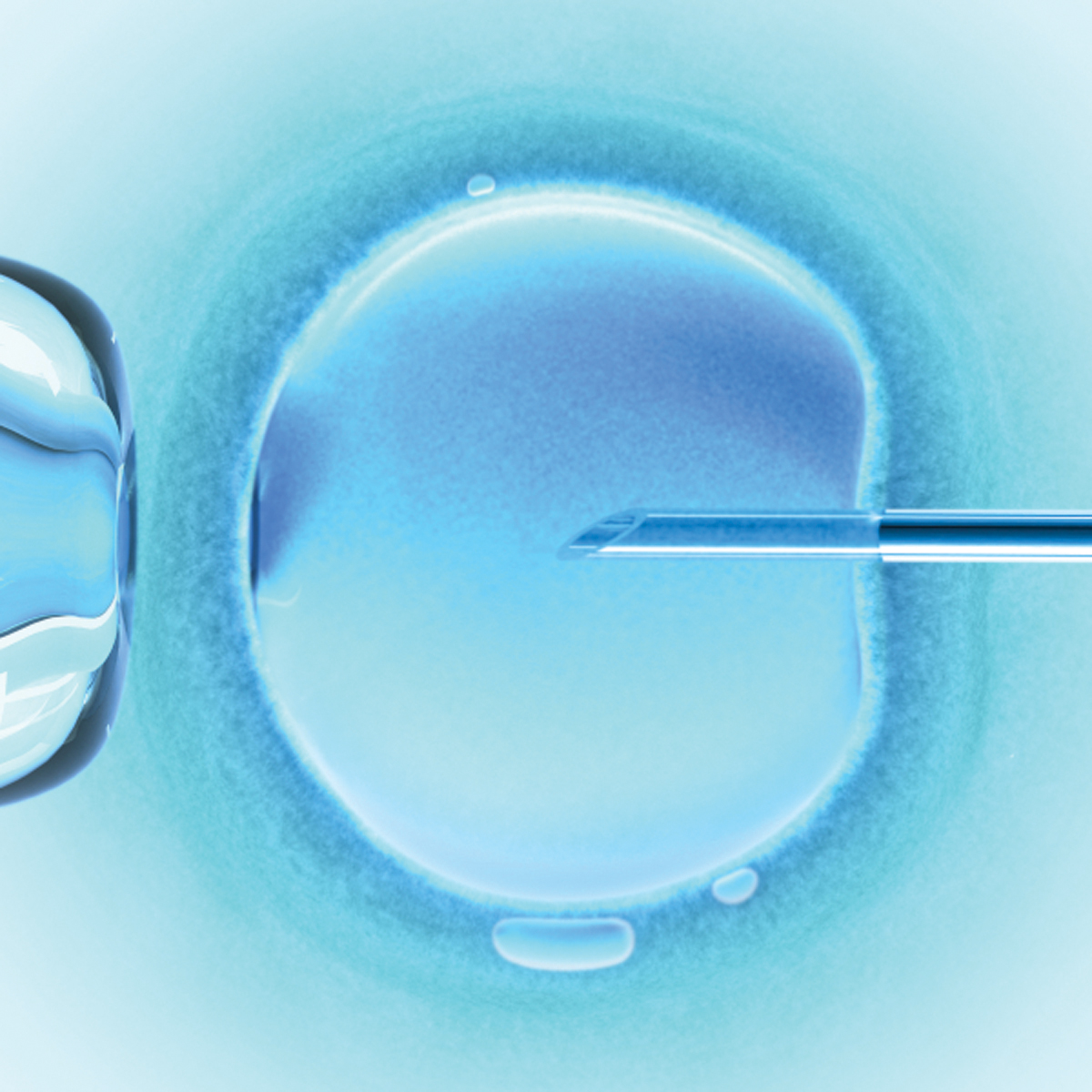
ivf-blueIf you take a quick poll of the next ten strangers you encounter and ask them about the Catholic Church and its attitude towards in vitro fertilization (IVF) you are likely to get two responses: half will not realise the Church has a concern with IVF and the other half will state how ridiculous it is that the Church is concerned about a process that can bring children to couples who are unable to conceive. Actually the Church has more than a concern; the Church has taught since IVF came about, that the process is “gravely immoral”. Not that the Church just made up this teaching when IVF began in the late 1970s, rather it applied its ongoing understanding of sexuality to this particular question. None the less, couples considering IVF as a last hope don’t like being told that their choice is gravely immoral so it’s worth considering just what the real problem is.

IVF presents a host of problems. First, it has no guaranteed success. The success rate of IVF is generally 50% for women under thirty but falls to just 20% for women under 40. Second, IVF costs a lot of money. Each treatment cycle can cost a couple around $3000 (after government assistance) whether there is success or not. Third, IVF has health risks. About 30% of IVF patients experience at least a mild case of ovarian hyperstimulation syndrome (OHSS) which causes swollen, painful ovaries. While mild cases can be treated with over-the-counter pain medication a small percentage develop severe OHSS which may require hospitalisation. Fourth, IVF creates a life by destroying others. A usual cycle of IVF produces multiple embryos to assist with the success rate and also to store if a couple wishes to try for more children further down the track. However the truth is these embryos are mostly unused. There are 120,000 embryos sitting in frozen storage in Australia, the majority of which will be eventually destroyed with about 90% of IVF couples choosing to discard them. It is worth remembering that an embryo is no longer just an egg or a sperm, it is a new human life. A couple must ask themselves if the birth of one of their children justifies the deliberate creation and destruction of a few of their other children.

Another real concern with IVF is the physical and emotional cost. And while the actual physical process of IVF is difficult enough perhaps even more serious is the emotional toll that must be borne in the relationship. A book well worth reading is The Hollow Heart by Irish journalist Martina Devlin; it is subtitled ‘The true story of one woman’s desire to give life and how it almost destroyed her own’. In three attempts at IVF Martina lost nine embryos but in the process she also lost her marriage and was driven to the depths of despair. While Martina and her husband began with the very natural desire for children this eventually became all encompassing for Martina so that everything else in her life (including her husband) became worthless. Children are a great blessing but if we cling too tightly to any blessing it can become for us a curse.

Perhaps surprisingly, even the reason above is not the Church’s primary concern with IVF. The fundamental problem with IVF is that it separates the sexual act from the procreative act. The child is not conceived out of the self-giving act of love between husband and wife in union with God. Rather, the power of life is entrusted to doctors and biologists while the couple is effectively reduced to providers of physical matter and mere observers. The sexual union though is not just an incidental action of marriage but the very action that makes marriage real and unites it to God’s love. IVF has no regard for the sexual union and thus has no regard for God’s plan around life and love.

The Church understands the great suffering of sterility and encourages good science into reducing the condition; and to highlight one example, there has been great success for couples in naprotechnology, which combines medical science with the proper dignity owed to married love. However, the Church is conscious that a child is always a gift, not something owed. When a couple vow before the priest to accept children lovingly from God there is always the inverted and somewhat harder aspect of the vow which infers that children may not be sent even after years of doing all the right things and saying all the right prayers. Couples who are struggling with fertility are called to work together with each other and with God to discover the unique way in which their marriage is called to a life of fruitfulness.

Comments are closed.

There is only one morality…is it yours?

Posted: 2 March 2013

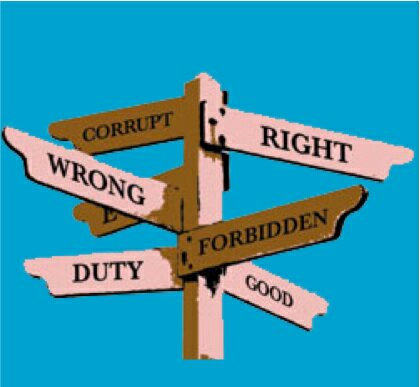
Morality2I was having a conversation with someone the other day and the topic turned briefly to politics. In discussing the various political parties I made the comment that while I don’t have any favoured political party, I would vote for a party on the basis of their stance on moral issues e.g. abortion, same-sex ‘marriage’ etc. After all, if a political party doesn’t understand the nature of marriage or respect the value of human life, I don’t really care how wonderful their economic policy might be. The person I was speaking with, who was also a person of the Christian faith, thought that to vote that way might be good for me, but it was not something that could or should be practiced by those who have no faith. This person believed it was better to encourage people to focus on issues we held in common such as the value of education and the importance of good healthcare.

This got me thinking, are moral issues private issues? Are my beliefs in particular key issues of morality dependent on my belief in a Supreme Being and adherence to a religious system? There are plenty of faithful and well meaning people out there who live by a strong moral code and are probably unable to annunciate any reason for their choices apart from their religion. Of course if someone decides to live an upright life because their faith encourages them to do so that is fantastic. However, it seems to me that we really need to be able to give better reason for living a certain way than because ‘God says’. I am not meaning to lessen the importance of God, but in a secular state God does not feature highly, and there is a growing secular movement hinging its success on telling people that certain aspects of morality are specific to religion and therefore not applicable to a large portion of society. If they are correct, if abortion is only a problem for the Pope, and if marriage between a man and a woman is just a venerable tradition, then it is true that believers have no right to encourage their chosen morality upon those who do not share their faith. But what if they are wrong?

This notion of morality needing religion is a commonly held thought out in the marketplace amongst people of faith or of none, but when one stops to think about it, it does not make sense. Morality does not rely on religion for its validity anymore than I feed myself daily because the law says that suicide is wrong. I look after my life (and respect the lives of others) because it is the right and proper thing to do; because I innately identify that life has some sort of value. I do not need a law to tell me that killing is wrong. Similarly, morality is not a set of rules that religions have come up with to either burden or bring joy to their adherents. Religions promote morality because a moral life is the behaviour proper to human beings. Morality is not right because religion says so; religion says morality is right because it is.

It is no coincidence that the bulk of the Ten Commandments of the Judeo Christian faiths form the basis of every developed legal system in the world. A government cannot, for example, decide to hold an election to see if its citizens would like to legalise murder and theft. A government exists to encourage and ensure that right and proper models of behaviour are lived out among its citizens. And the Latin root of the word ‘moral’ means just that – the proper behaviour of a person in society. Even the definition implies that this behaviour is something that is self-evident.

Of course the reason that secularists do not like talking about a moral code being ‘normal’ or ‘self-evident’ is because it leads to questions about how humans have an innate sense that some things are more right than others. If the thought is progressed far enough eventually the matter of God comes up, and those who don’t want to have anything to do with greater being become somewhat frustrated. While we do not necessarily need to take a conversation that far it is imperative that those we come in contact with leave us simply understanding that morality is good for the human person, any human person, and if something moral is worth its weight then it transcends all religion and is common to us all.

Comments are closed.

Modesty. A Sign of Respect for Men and Women.

Posted: 4 November 2012

Modesty Sign

So there I was at the train station minding my own business when a young lady walked past wearing a pair of tights. At least I think they were tights. It might have been black body paint for all I know, as it looked like she was wearing nothing at all below the waist. I have since been informed by a reliable source that tights are very much in fashion, which would explain why so many women seem to be getting around in them.

Now I am all for fashion, (after all it was in the name of fashion that I sold my maroon microfiber suit on eBay), but I question the appropriateness of an item of clothing that only serves to draw attention to the body and not the person. Regardless of why she was wearing the tights, as that young lady walked down the platform the message she sent was ‘don’t worry about who I am, just have a look at my body’. And that is exactly what an array of men did as they watched her move down the platform. I am certainly not stating that all men’s fashion is worthy of the human person either, but there is no question that women’s clothing that has the most tendency to be provocative.

Many women do not even seem to realise the extent to which their clothing is sending certain messages. A lot of this comes down to the way men and women are wired. For the most part men are visual creatures and they receive through the eyes. Women however are fed through imagery and story. Men understand what it is to notice a woman and immediately be drawn to her physical make up, but women do not instinctively respond in that way to men (even if trashy romance novels paint a different picture). This is the reason that in the traditional formation of young girls the teaching of modesty was an essential element. Because women do not have the same tendency to visually objectify a man’s body they do not naturally understand the need to dress in a way that introduces them first of all, and not their body.

Some years ago there was a terrible gang rape case in Sydney by some Islamic young men. One of the local imams came out and instead of condemning the men, accused Australian women of inviting rape because of the way they dressed. His comments were highly offensive and inappropriate. Days of public commentary deriding the cleric asserted the right of women to dress as they pleased and the responsibility of men to control themselves. And the commentary was correct. No matter how a woman dresses or acts; it is never an invitation for a man to be sexually violent towards her. In his famed Sermon on the Mount, Jesus of Nazareth went a step further and called his hearers to a purity of heart saying that the man who even lusts after a woman has already committed adultery with her in his heart. The point is a real man is one at all times, in thought and in action.

Even though this imam was completely out of place, the essence of his comment was that the way a woman dresses has an impact on men and to ignore that is to be foolishly unaware of the reality. We all know deep down how we should act but we also sense the very human struggle to act as we should. If I am inviting a friend who struggles with alcohol to my house for dinner, I am not going to offer him a beer as he walks through the door and an array of fine wines with the meal. To do that would be cruel to him and it would not be showing genuine sensitively for his particular struggle. I would be well within my rights to have the alcohol flowing throughout the meal but I certainly could not be called a true friend. We do not become better people simply doing what feels good; we become better people by being increasingly more aware of those around us.

I am sure the young lady walking down that train platform was a lovely woman. But by wearing clothes that detract from her personality and focus men on her body alone, she risks drawing only the attention of those who are interested in her body instead of allowing them to encounter the person within.

Comments are closed.

Are We All Sexual Perverts?

Posted: 21 October 2012

Good v Evil

Recently the Sydney Opera House hosted the Festival of Dangerous Ideas which brings together a host of speakers on a variety of controversial topics. Not one to shy away from controversy I attended a couple of sessions including We are all Sexual Perverts by an American psychologist Jesse Bering, whose basic premise was that each person has within them certain desires that others would find offensive and indeed disgusting. Professing himself to be an active homosexual, Bering believes that while society has become accepting of homosexuality (once called a ‘behaviour’ but now popularly referred to as an ‘orientation’) we should consider why we might be less accepting of the approximately 547 other ‘paraphilias’ ranging from arousal by stuffed animal toys (plushophilia), machines (mechaphilia) or even trees (dendrophilia).

While many of the stranger paraphilias raised laughter amongst the audience, Bering also spent time considering more well known philias such as paedophilia and zoophilia (bestiality), posing the question of how we might respond to someone who had a tendency towards these even though they had never acted upon them. Bering believes that all paraphilias should be accepted and respected because the inclination has nothing to do with whether or not the person has committed some kind of social transgression. Interestingly and correctly Bering did state that without belief in some type of divine creator who had mapped out a design for sexuality who were we to judge a person’s interior sexual desires as more or less worthy than our own. Bering admits that his interest in the whole topic is attributed to his own homosexuality and a childhood lived among “conservative and religious” people which had led him to a sympathy for others who find themselves in minority sexual categories.

While Bering was dismissive of Christianity I could not help but think how much the ancient Christian understanding of the human person, original sin and cooperation with grace could offer genuine consolation. My guess would be that Bering grew up with a Protestant fundamentalist version of Christianity but the philosophically grounded ideas found in Catholicism understand much of what he was saying. Every human person is indeed fallen and this very human struggle is captured by the Apostle Paul who two thousand years wrote “I do not understand my own actions. For I do not do what I want, but I do the very thing I hate”. Bering has not come up with anything new in stating that there are as many perversions in the world as there are people. The Christian fathers and doctors across the centuries have tirelessly reminded the faithful of the struggles inherited through Original Sin; however this is where Bering, representing the secular mindset, and the Church, part ways.

While some people would no doubt find Bering’s ideas about perversion offensive he must be commended for facing human struggles head on. He is also right to state that there is a vast difference between an inclination and an action. Christian theology states that for a sin to be committed there must always be full knowledge and full consent; one cannot accidently commit sin, nor is a fleeting desire to steal my neighbour’s car or commit adultery with my married work colleague a sin. The problem arises when we feed an inordinate desire by dwelling on an idea that we know is wrong or engaging in evil behaviour. Bering admits that he does not like to use the language of ‘evil’ or ‘immoral’ and rightly so, for without God as a standard of morality, right and wrong is only anchored in the arbitrary currents of man-made laws.

What the Christian ideal offers that Bering cannot is the virtue of hope. Even though we are all born with tendencies and challenges that can lead us away from what is true, good and beautiful, by humbly acknowledging our own weaknesses and turning our face towards God, those very same weaknesses can become stepping stones to holiness and lasting happiness. Without hope in God it is correct that at some level we are all disgusting perverts and we can only seek to justify and revel in our perversions. However the Christian message raises a person up. While acknowledging every human weakness (even the ones we are too ashamed to share with anyone) the Church says in the words of the late Pope John Paul II, “We are not the sum of our weaknesses and failures; we are the sum of the Father’s love for us and our real capacity to become the image of his Son.”

Comments are closed.

Is truth possible?

Posted: 5 August 2012

what is truth

I was filling in an online form recently and the security question at the end was “2+9=” and I had to type in the answer to submit the page. I found it interesting that this very mainstream form on the website of this very mainstream company was not only telling me that there was objective truth but that they actually knew what it was! If I had tried to type in that 2+9=5 I would have been told I was wrong. No message was going to appear and tell me that while they respected my freedom to believe that 2+9=5 they preferred the response to be eleven. The message would very simply say, ‘Incorrect, try again’.

I found this small incident amusing because for the most part we exist in a ‘truth free’ society where definitive statements are not welcome. Our society does of course acknowledge right and wrong but these are mostly understood to be established by the Parliament and upheld by the police. Something that is ‘right’ today can be declared ‘wrong’ tomorrow by a simple legislative adjustment. People have lost the idea that there is a genuine reality that is bigger than the law. To declare that something is right or wrong is very different to stating that something is true or untrue.

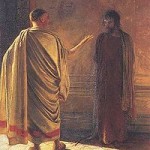
The debate over the possibility of truth is not a new phenomenon. Two thousand years ago Pontius Pilate, Prefect of the Province of the Roman Empire in Judea, had a man brought before him who claimed to bear witness to truth. Pilate is recorded as famously asking this Jesus figure, Quid est veritas, what is truth? Perhaps Pilate was genuinely asking for a response or perhaps he was stating that there was no such reality as truth. Either way, Pilate had his particular version of truth and so the rest of the story to do with Jesus is as they say…history.

Before being elected as Pope Benedict XVI, Joseph Ratzinger once stated that “Truth is not determined by the majority vote”. In other words, even if the entire world legislated and believed that 2+9=5 they would quite simply be wrong. The belief that real truth exists is the belief that there is a reality bigger than our ability to perceive or understand it.

You might have heard someone say ‘that is your truth’ or ‘this is my truth’ but we should not allow such a statement to pass unchallenged. If something is true then by its very nature it must be true for everyone. Either the words you are reading now are truly here or they are not. Their existence does not depend on you having seen or read them. We really have only two choices then: to acknowledge that some definitive truth can exist, or, to state that the idea of truth is impossible.

We live in a society that desires to create reality in response to what the majority vote wants. Euthanasia is good if enough people say it is. Same sex marriage is real if enough people say it is. Drugs can be legalised if enough people want it. Our moral and ethical code becomes not something that we strive for to make ourselves better people, but rather something that is adjusted to where we feel comfortable.

In all this, what is legal becomes the mark for what is moral and that is a dangerous path to trod. If the measure of right and wrong (and thus the standard of ‘truth’) is in the hands of a person or a political party then the only standard they have is themselves. And that has been the way on for every dictator from Julius Caesar to Pol Pot to Slobodan Milosevic. It is easy to find a very long list of dictators ranging from the benevolent to the inhumane but they share in common the notion that their truth is the truth.

When we as a ‘modern’ society decided that it would be better to live with our personal truths instead of under the one truth, we may not have realised that we handed over to anyone who wanted to take it the ideas of right and wrong. Genuine happiness however is not to be found in creating our own realities and labeling them as a truth. Happiness comes in discovering what is the truth and living our lives in accordance with that. After all, two plus nine will always equal eleven whether we like it or not.

Comments are closed.

No food…but plenty of condoms

Posted: 25 July 2012

starving-children-grain

I opened the newspaper this week to read the headline that Australia will be doubling an aspect of its foreign aid to $50 million to assist the poor women of the world. What a wonderful idea. Perhaps the aid will be going towards vital medication to women in Sub-Saharan Africa; perhaps food and vitamins to women in South Asia; or perhaps it will pay for education and training in more effective farming methods? No. The money will go completely towards ‘family planning’. And not just our $50 million, add to that half a billion dollars from the Bill and Melinda Gates Foundation, with a total amount from worldwide governments and the private sector of $2.6 billion. This amount was committed during the recently held family planning summit in London. So that is $2.6 billion for condoms, contraceptive pills and IUDs (small devices placed in the uterus which release a chemical to prevent pregnancy). Add to this an army of frontline health workers to go into these far flung places and educate women about how to best stop having children. This is family planning that has as its aim the destruction of the family.

The money will go to sustain the current contraceptive use by 260 million women in 69 of the world’s poorest nations. It will further ‘help’ another 222 million women who want to use contraception but do not have access to it. I wonder who spoke to these 222 million women? It is no secret that much foreign aid has for years been dependent on women signing up to family planning programs. If you have five hungry children and your next ration pack is dependent on having a device stuck up your uterus, it may not leave a great deal of choice. As we all know a mother will sacrifice everything for her children, and in this case her very dignity as a woman. Too often it is truckloads of contraceptives that make it across war-torn and famine-ridden borders instead of truckloads of food, water and medicines.

A number of the reports from the family planning summit speak about the challenges faced in implementing family planning programs including places where contraception is seen as unacceptable due to culture or religion. Does that mean that the Atheistic West with all its money and superiority is going to charge on into nations and, one family at a time, cut down the pillars of culture and faith that make these people who they are? The Western world has so enthusiastically embraced contraception that many nations in Europe are no longer even replacing their own population. The immigration we so heavily rely on in Australia is coming from the very nations whose populations we want to destroy.

At the heart of all this is a loss of seeing fertility as a good. The very essence of a woman is that she can bear new life. Some women may never be able to conceive through no fault of their own but that is very different to taking the greatest aspect of femininity and killing it with a cocktail of chemicals. Ironically in the 21st century we are very conscious of what we eat, yet millions upon millions of women continuously ingest harmful chemicals to stop what is a perfectly normal process. Contraception is the only ‘medication’ given to someone who is completely healthy to stop them being completely healthy. Instead of educating women (and men) about how their bodies work we create chemicals to override them. Just last month another two lawsuits were filed against one of the largest manufacturers of the IUD. The incident involved the IUD device migrating from the location where it was implanted so that the women were forced to undergo a hysterectomy and now suffer ongoing pain and permanent injury.

The notion of ‘family planning’ that is promoted by wealthy companies such as Marie Stopes International and Planned Parenthood (the largest providers of abortion in the world) has infected completely the governments of the secular western world. The mentality has also spread to most international aid organisations that purport to be pro child. (Think carefully next time you get bowled up in a shopping centre and asked to sponsor children in Africa).

Having sacrificed our own women and daughters to the god of sterility we now seek to go into the bodies of women and girls in developing nations, and treating them like nothing better than cattle, inject them with drugs that ‘we know’ will be for their own good. The situation is an international disgrace.

Comments are closed.

Violence again Women. Australia says…Yes

Posted: 7 July 2012

Prostitutes

In 2004 the Federal Government funded a $20 million campaign with the slogan, ‘Violence against Women. Australia Say No.’ The campaign was to bring awareness of violence occurring behind closed doors. As part of the campaign a TV ad was produced with a selection of men justifying why they assaulted women and the slogan making it clear that such behaviour was not tolerable. More recently a government campaign was launched called ’The Line’ which encouraged young people to consider where they would draw the line regarding issues such as ‘hooking up’ sexually at parties. The message in response to this possible quandary was not to engage sexually with someone unless there was mutual consent.

It may seem on face value that Australia is serious about stamping out abuse but I wonder just how serious we really are. While all these sorts of campaigns are of some value they fall into the interesting category of a secular government trying to teach morality. While a government may make laws to try and enact a particular behaviour they are seemingly unable to plug the illogical and confusing holes that appear in their attempts.

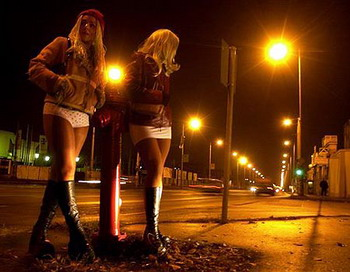
The last remaining ‘virtue’ in secular morality is consent. With consent two people can do whatever they wish, without consent, or with consent withdrawn at any time, one of those people becomes a criminal. According to the logic of the aforementioned campaigns so long as a woman says the word ‘yes’ a man is at rights to enjoy her sexually and vice versa. This would mean it is ‘moral’ for a man to go out to a different bar every night and find a woman who is lonely, needy or broken enough, that with a little kindness (and a couple of glasses of alcohol) he can have sex with on that night and walk away the next morning. If bars are not his scene he is legally able to buy consent with one of the estimated 20,000 people engaging in some form of prostitution across Australia in any one year. While it is obviously hard to gauge correct figures, one statistic to emerge from a poll was that 15 per cent of men sampled had visited a prostitute. Some samples have suggested as many as 40 per cent of the male population have visited or will visit a prostitute at some point in their life.

So whether one is obtaining sexual pleasure by scanning the bars and clubs or by scanning the Yellow Pages for ‘Adult Services’ there is no mention of what effect this has on the emotional and mental well being of vulnerable women. Completely leaving aside the social costs of marital infidelity, the fact that the rise of ‘legal’ internet pornography is changing the way men understand their own sexuality and the epidemic of sexually transmitted infections…what is this social acceptance of commitment-free sex doing to us?

Allow me to tell you what it is doing. When society advocates consent as the only moral compass and thinks that violence is only possible when someone withdraws that consent it completely negates that we are often broken and hurt people. Some of us have a tendency to use others and others of us have a tendency to allow ourselves to be used. Deep down we all want the same thing, love, but more often than not we get confused about how to find it.

The notion of free-sex and legal prostitution sends the very clear message that a person is an object and in some situations we can use them as such. While most people would not advocate me selling myself to be used as a punching bag, we seem to think it is ok to violate the body of a woman we don’t even know so long as she says yes. The word yes however is easy to say. If a woman is alone and someone is showing her attention, she may say yes. If a woman is desperate for drugs or money, she may say yes. That does not mean in any way that the actions she is saying yes to, are of benefit to her overall well being.

A nation which allows its citizens to treat the most needy and vulnerable as objects for another person’s pleasure is not a nation that genuinely understands the human condition. We can roll out all the feel-good campaigns we want about anti-violence and the importance of consent but until we acknowledge that all people, no matter how desperate they are have a right to be treated with complete dignity, then we actually do advocate certain types of violence in certain situations.

Comments are closed.

The Scandal of Unfaithful Priests

Posted: 10 June 2012

collar 1

I had a few ideas in mind for this particular column but on the day I sat down to write it the story broke of a popular Sydney priest who had just announced to his congregation that he had secretly married a woman one year earlier and had since been living a double life. Immediately this priest was across the media in print and radio stating his case and decrying the Church for her laws on clerical celibacy. And as was to be expected the majority of commentary came out in favour of him and against the Church. This priest has always been very diligent in teaching the faith and bestowing the sacraments which makes the story even more disappointing but what is most disappointing is the harm and scandal such a situation does to the Church and to the people of God.

First it must be said that we are all fallen. Each of us has our individual temptations and we often struggle to be faithful to the higher ideals we know we should embrace. Some struggle to moderately use alcohol, others struggle with lust, others struggle with anger. The scandal is not in our struggle and the scandal is not even in our falling into sin. The scandal is when we portray our vices as virtues, try to justify our erroneous judgement and then sell that judgement to others as a truth to be believed.
Many of those commenting on the news story about this priest were first congratulating him on finding true love before deriding the Catholic Church for ‘making’ him live a lonely and unfulfilled life all these past years. This is strange logic. The priest who abandons the promises he freely made at ordination is no more a hero than the married man who abandons his wife for a younger woman. Both priesthood and marriage are vocations for life and both involve decisions that inevitably say no to other future options. The woman who chooses to get involved with a priest ought to be careful, for if he takes his vows to the Church so lightly, who would he be more faithful when it comes to making vows with a woman?

Celibacy is a great gift within the Church but in this sex-saturated, me-driven society it is easily trampled. Contrary to popular belief, the Western Church chooses priests from among celibate men not because it is cheaper, easier or something more sinister. The Church from the time of the apostles has ordained celibate men as priests in imitation of the example of the celibate Christ. The Lord also spoke about some people giving up marriage for the sake of the kingdom of heaven. The point is that there is no marriage in heaven; marriage is a reality in this world that is designed to help a couple enter into the sort of love that will prepare them to live in eternal love with God. The celibate man says to the world ‘I forgo marriage and family in this life to point to the eternal marriage that will take place in heaven’; in other words, he leaves aside one great good to point to an even greater good. His life becomes a sign that this world is not all there is.

However, priesthood and celibacy have never been at odds with one another. The Eastern Catholic and Orthodox Churches have always had married priests and even the Western Church, on occasion, will ordain married men (e.g. a convert from Anglicanism). Perhaps one day celibacy will not be a pre-requirement for priesthood in the Western Church but that would be a sad day. Celibacy is one of the great jewels in the Church’s crown as it comes from Christ himself. It is true that celibacy is not ‘natural’, it is ‘supernatural’ and it only makes sense in the light of faith, with the understanding that heaven is our final destination. This particular priest stated he did not leave the priesthood earlier to get married because he enjoyed being a priest. Priesthood though is always a gift; it is not something that we demand on our own conditions. Just as a married couple must enter into marriage as it is, a man must enter into the priesthood as it is. It is not ours to arrange as we see fit.

But now what will now happen is predictable. This priest will eventually fade into the background and move on with his own life but the harm he has done will reverberate long after he has gone. While this situation is a good reminder that people need to always set their eyes on Christ and not any particular priest, it is easier said than done. Those who admired this priest for his good qualities (of which he has many) will now think that the Church is unjust and unfair and their faith in Christ’s Church will become weakened. In letting his pride overcome him, in letting his own ego lead the way, this priest who was called by the Church to be a shepherd to her people becomes yet another wolf in sheep’s clothing.

Comments are closed.

Theology of the Body as it was in the Beginning

Posted: 21 December 2011

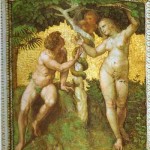
raphael_adam_and_eve_stanza_della_segnatura_c1509

People ask a lot of questions of the Catholic Church, especially in regards morality. “What is the problem with sex outside of marriage?” Why is contraception immoral?” “Why does marriage have to be between one man and one woman?” People used to challenge Jesus with similar questions. At one point a group of Pharisees came up to Christ to ask him if divorce was permissible. To their surprise though He did not simply point them to the written law but instead he invited them to consider that “from the beginning God made them male and female” and created a marriage bond that could not be broken. The Pharisees complained that Moses had allowed them to divorce, but even though this had happened, Christ looked deeply at them and said “but from the beginning it was not so.”

Why direct the people to the beginning and not just the written law? Because Christ was directing them to the law written on their hearts. We exist in a fallen world, in a world where we struggle to do what is right, where the body and the spirit battle one another. However, it was not always like that, there was a time when humanity knew what it was to love God, love others and love themselves rightly. This time was before Original Sin entered the world and we read about it in just a few short passages in the book of Genesis. Thirty years ago a young Pope John Paul II began to give a series of addresses that delved back into the beginning so that we would know better the answer to the questions, ‘Who am I’ and ‘What does it mean to be human’. These addresses are known today as the Theology of the Body.

Pope John Paul saw such importance in the beginning, because he believed that even though humans now lived in a world marred with Original Sin, they carried within their hearts the remnants of what it was to live without sin, before Adam and Eve ‘ate the apple’ (there really was no apple, check your bible). In his catechesis, John Paul named three original experiences that existed before the Fall. He called them Original Solitude, Original Unity and Original Nakedness. After Original Sin these three became ruptured but when Jesus points the Pharisees back to the beginning he is saying that this is the way they are called to live. No longer does he want us to live under the weight of the law but rather to understand that when we know who we are as human persons, the knowledge of what is right and wrong wells up from within us.

In the experience of solitude, God had created only one person and God recognises it was not good that the human person be alone. This person was invited to name all the animals and through that find someone similar for himself. Yet after giving names to all the animals of land, sea and sky, the human discovered there was no one like him. Why? The human had a body and all the animals had bodies so what was lacking? The difference was that the body of the human was symbolic; it contained a person, a spiritual being. The human realised that he was not an animal or an object but he was a subject with reason and free will.

In the experience of unity God created a second being from the rib of the first being and creation was completed with male and female, equal in dignity. At the sight of the woman, the man cried out with a great joy because here was a body that also represented a human person. Their bodies had differences but it was their diversity that made true unity possible. The man and woman realised that their bodies called them to love and that they were created to be a gift to one another.

In the experience of nakedness the man and the woman enjoy a total trust and defenselessness before each other. They rest in the knowledge that the other person would never use them as an object but always see them as a person to be loved. There was a total unity between the spiritual and the physical sides of the human person.

This was the paradise we were created for but we all know something changed.

That change was Original Sin and it ruptured all the future generations understanding of what it was to be a human person. It was as if a great amnesia came over humanity. It has become hard to sense God in our lives and recall that we are spiritual as well as bodily. The differences between men and women became seen as obstacles and causes for blame. There became a tendency to use one another, in their lusts men dominate women and in a confused desire for love women allow themselves to be used. Everything has been turned upside down.

When Christ is speaking to the Pharisees he is also speaking to every human person and he invites us to simply remember who we are. Every moral question has an answer at the dawn of creation. This was the whole reason Christ came; to point the way out of amnesia and remind us that that “in the beginning it was not so.”

Comments are closed.