No food…but plenty of condoms

Posted: 25 July 2012

starving-children-grain

I opened the newspaper this week to read the headline that Australia will be doubling an aspect of its foreign aid to $50 million to assist the poor women of the world. What a wonderful idea. Perhaps the aid will be going towards vital medication to women in Sub-Saharan Africa; perhaps food and vitamins to women in South Asia; or perhaps it will pay for education and training in more effective farming methods? No. The money will go completely towards ‘family planning’. And not just our $50 million, add to that half a billion dollars from the Bill and Melinda Gates Foundation, with a total amount from worldwide governments and the private sector of $2.6 billion. This amount was committed during the recently held family planning summit in London. So that is $2.6 billion for condoms, contraceptive pills and IUDs (small devices placed in the uterus which release a chemical to prevent pregnancy). Add to this an army of frontline health workers to go into these far flung places and educate women about how to best stop having children. This is family planning that has as its aim the destruction of the family.

The money will go to sustain the current contraceptive use by 260 million women in 69 of the world’s poorest nations. It will further ‘help’ another 222 million women who want to use contraception but do not have access to it. I wonder who spoke to these 222 million women? It is no secret that much foreign aid has for years been dependent on women signing up to family planning programs. If you have five hungry children and your next ration pack is dependent on having a device stuck up your uterus, it may not leave a great deal of choice. As we all know a mother will sacrifice everything for her children, and in this case her very dignity as a woman. Too often it is truckloads of contraceptives that make it across war-torn and famine-ridden borders instead of truckloads of food, water and medicines.

A number of the reports from the family planning summit speak about the challenges faced in implementing family planning programs including places where contraception is seen as unacceptable due to culture or religion. Does that mean that the Atheistic West with all its money and superiority is going to charge on into nations and, one family at a time, cut down the pillars of culture and faith that make these people who they are? The Western world has so enthusiastically embraced contraception that many nations in Europe are no longer even replacing their own population. The immigration we so heavily rely on in Australia is coming from the very nations whose populations we want to destroy.

At the heart of all this is a loss of seeing fertility as a good. The very essence of a woman is that she can bear new life. Some women may never be able to conceive through no fault of their own but that is very different to taking the greatest aspect of femininity and killing it with a cocktail of chemicals. Ironically in the 21st century we are very conscious of what we eat, yet millions upon millions of women continuously ingest harmful chemicals to stop what is a perfectly normal process. Contraception is the only ‘medication’ given to someone who is completely healthy to stop them being completely healthy. Instead of educating women (and men) about how their bodies work we create chemicals to override them. Just last month another two lawsuits were filed against one of the largest manufacturers of the IUD. The incident involved the IUD device migrating from the location where it was implanted so that the women were forced to undergo a hysterectomy and now suffer ongoing pain and permanent injury.

The notion of ‘family planning’ that is promoted by wealthy companies such as Marie Stopes International and Planned Parenthood (the largest providers of abortion in the world) has infected completely the governments of the secular western world. The mentality has also spread to most international aid organisations that purport to be pro child. (Think carefully next time you get bowled up in a shopping centre and asked to sponsor children in Africa).

Having sacrificed our own women and daughters to the god of sterility we now seek to go into the bodies of women and girls in developing nations, and treating them like nothing better than cattle, inject them with drugs that ‘we know’ will be for their own good. The situation is an international disgrace.

Comments are closed.

What is the point of suffering?

Posted: 5 November 2011

Biafra, Nov. 1969Medical clinic in Mabaitoti - Owerri.

Anyone out there had any sufferings cross their path lately? Perhaps it’s something transitory like recently losing a job. Perhaps it’s something long term like caring for someone with a disability. Maybe it’s the anxious wait to meet the right person or the heartache of dealing with marriage problems. Then of course there are the sufferings that most of us will never have to encounter such as starvation or a lack of clean drinking water. Suffering is a strange thing, it surrounds us and all of us will meet it in some shape at various points through our lives, yet most people have no idea about how to respond to it.

I recall once being down about something and a friend said to me in all sincerity “just remember that there is always someone worse off than you”. I am sure many of you have given or received similar advice. And at face value the logic is true, I am not living on a dollar-a-day in a third world country; I have a car and a house and people who love me. Surely I would be better to consider the trials of others before getting all worked up about my own sufferings?

Of all the faith systems in the world, Christianity has the most profound understanding of suffering, after all its founder was put to death and the instrument of his death – the cross – has become the enduring Christian sign. The call of Christ to “take up your cross” is a part of common speech. But what does it mean to take up our cross and how does that play into the daily sufferings we face?

Perhaps if we do not understanding suffering the best we believe we can offer is a consolation which compares sufferings. The crux of the matter though is that while God does not directly will for anyone to suffer, he does allow such sufferings and he allows them in ways that can be beneficial for us, if we embrace them in the correct spirit. Our crosses are actually specifically shaped for us, they take into account our strengths and our weaknesses and what we need (often this is very different from what we think we need). Perhaps the family with no food in Africa is objectively in a more desperate situation than I am but my particular cross is not one of starvation. It really does not matter what someone else is suffering with because what is real to me is my particular suffering in this moment, even if it is objectively less than another. I do not need someone to tell me that my cross is not the biggest cross, the fact is, it is my cross.

If we believe Christ’s command to take up our cross then it would seem we actually have a duty to embrace the particular sufferings that fall our way. I am certainly not saying that we have to desire suffering and pain, but perhaps we need to look more deeply into our particular cross to see what good is within. If we live with an attitude that refuses to accept suffering then we might actually be closing ourselves off to an important gift that has been offered to us alone. Every event we encounter is in a broad sense, sacramental, that is, it is an external sign containing within it God’s action for us.

We might consider what would have happened if Christ decided not to embrace his cross. The cross of Christ is the source of salvation, it points to a love that we will spend our lives aspiring towards. Our own crosses are our paths to salvation when taken up and united with the cross of Christ. You may know the phrase “offer it up”, it’s often something told to children who are complaining but it has a deep and lasting value that we should probably all seek to embrace in our own lives. To offer something up, from drinking cold coffee to the way we deal with tragic news, gives us an outlook that quite simply, the world cannot give.

It is not that one walks into the hospital room of a friend diagnosed with cancer and simply says “offer it up” and walks out. If though in our lives we have come to understand that our crosses can be the tools that God gives to help us towards salvation, we will be in a far better place to truly be with the one who is suffering. Instead of trying to distract the sufferer from their pain and pretend it is not as bad as it could be we can help them to see the cross before them with new eyes.

Comments are closed.

Smoking and ‘Safe Sex’ – The Great Hypocrisy

Posted: 22 September 2011

cigarette-420x0

Last month, the Federal Government unveiled draft legislation to introduce plain packaging laws for cigarettes. Health minister Nicola Roxon was unequivocal in her determination to put the final nail in the coffin of the tobacco industry.

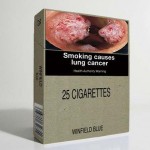
Showing off the new compulsory olive green packaging with the vivid images of clogged arteries, cancerous gums and gangrene-infected feet, the minister declared, “We are going to ensure that in Australia there are no remaining avenues for tobacco companies to market and promote their products, particularly to young people. Gone are the days when people can pretend that cigarettes are glamorous.”

I have never smoked, have never had any desire to smoke and nothing frustrates me more than walking down the street and breathing in the secondhand smoke of the person puffing away in front of me, but this latest legislation push does cause me to wonder about the haphazard approach that federal policy takes to the health of its citizens.

What is most frustrating is the hypocritical approach given to other public health issues, in this instance the deceptive and fallacious ‘safe sex’ campaign that is sold to young people via various well designed and sexy governmental websites and videos. The current, official, safe sex, Federal Government website tagline is “STIs are spreading fast, always use a condom”. This is accompanied by a young, naked, attractive couple embracing one another.

The message is all about condoms stopping everything from HIV to Chlamydia to Gonorrhoea. The site contains interactive games and activities to get across the condom message. It even ran a national competition to design a ‘condom tin’ to make carrying condoms “as normal as carrying your mobile phone”. The problem is that the condom is not dealing with the issue, it is just skirting around it. And the issue which no government in the 21st century would be game enough to speak out about is sexual promiscuity.
In 2005, the government banned terms such as ‘light’, ‘mild’ and ‘extra mild’ on tobacco packaging as it gave the false impression that some cigarettes were less harmful than others.

Yet here we are in 2011, still telling young people that it is fine to toy with diseases such a HIV and Syphilis so long as they use a thin rubber sheath. There was a major TV ad campaign run last year in which the entertaining and simplistic message was “Anyone can get Herpes” (anyone who is having promiscuous sex, that is). Before that there was the highly visible campaign promoting the cervical cancer vaccine ‘Gardasil’ which was given out free by the Australian Government to any females aged 12 to 26.

The aspect that was not highly discussed in the popular media was that cervical cancer comes about as a result of the human papilloma virus which is a sexually transmitted disease. So, instead of speaking to 12 year olds about the value of who they are and what sex is, we injected them with a vaccine.

In these campaigns, we see something very different to what goes on in the war against tobacco.

The government is closing down all avenues left for the promotion and sale of tobacco products, yet in the ‘fight’ against deadly sexually transmitted infections the best they can say is, wear a condom and get an injection. What they are not saying is that a sexually promiscuous lifestyle is fraught with the risk of disease and heartache.

What is needed in the ‘safe sex’ campaign is an injection of truth. The safe sex message is all about information; it needs to be about formation. What young person wants to put themselves at such a high risk of disease? Women who use the pill for four years or longer prior to their first full term pregnancy have a 52 per cent higher risk of cancer than those not on the pill. That sort of risk is seemingly acceptable, yet last year Toyota recalled 26,000 cars because 0.3 per cent of them experienced a slow brake fluid leak.

What about the fact that girls who are sexually active are more than three times likely to be depressed as girls who are abstinent prior to marriage? Teenage boys who are sexually active are more than twice as likely to struggle with depression and are more than eight times likely to attempt suicide.

Those who are sexually active prior to marriage have a significantly increased risk of divorce. For a man who marries as a virgin, his chance of divorce is 63 per cent lower than a non-virgin. For girls, it is 76 per cent lower when they marry as virgins.

Sadly, general Western society has fallen into the pit of relativism so we are impotent (excuse the pun) to stand up and actually say that promiscuous sex is not glamorous, that it is better to wait until marriage to be sexually active because there is a far higher chance of happiness on every level and a genuinely decreased risk of a diseased body and diseased emotions. After all, there is no condom for the heart.

Comments are closed.