The Scandal of Unfaithful Priests

Posted: 10 June 2012

collar 1

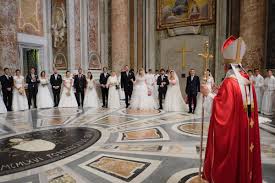
I had a few ideas in mind for this particular column but on the day I sat down to write it the story broke of a popular Sydney priest who had just announced to his congregation that he had secretly married a woman one year earlier and had since been living a double life. Immediately this priest was across the media in print and radio stating his case and decrying the Church for her laws on clerical celibacy. And as was to be expected the majority of commentary came out in favour of him and against the Church. This priest has always been very diligent in teaching the faith and bestowing the sacraments which makes the story even more disappointing but what is most disappointing is the harm and scandal such a situation does to the Church and to the people of God.

First it must be said that we are all fallen. Each of us has our individual temptations and we often struggle to be faithful to the higher ideals we know we should embrace. Some struggle to moderately use alcohol, others struggle with lust, others struggle with anger. The scandal is not in our struggle and the scandal is not even in our falling into sin. The scandal is when we portray our vices as virtues, try to justify our erroneous judgement and then sell that judgement to others as a truth to be believed.
Many of those commenting on the news story about this priest were first congratulating him on finding true love before deriding the Catholic Church for ‘making’ him live a lonely and unfulfilled life all these past years. This is strange logic. The priest who abandons the promises he freely made at ordination is no more a hero than the married man who abandons his wife for a younger woman. Both priesthood and marriage are vocations for life and both involve decisions that inevitably say no to other future options. The woman who chooses to get involved with a priest ought to be careful, for if he takes his vows to the Church so lightly, who would he be more faithful when it comes to making vows with a woman?

Celibacy is a great gift within the Church but in this sex-saturated, me-driven society it is easily trampled. Contrary to popular belief, the Western Church chooses priests from among celibate men not because it is cheaper, easier or something more sinister. The Church from the time of the apostles has ordained celibate men as priests in imitation of the example of the celibate Christ. The Lord also spoke about some people giving up marriage for the sake of the kingdom of heaven. The point is that there is no marriage in heaven; marriage is a reality in this world that is designed to help a couple enter into the sort of love that will prepare them to live in eternal love with God. The celibate man says to the world ‘I forgo marriage and family in this life to point to the eternal marriage that will take place in heaven’; in other words, he leaves aside one great good to point to an even greater good. His life becomes a sign that this world is not all there is.

However, priesthood and celibacy have never been at odds with one another. The Eastern Catholic and Orthodox Churches have always had married priests and even the Western Church, on occasion, will ordain married men (e.g. a convert from Anglicanism). Perhaps one day celibacy will not be a pre-requirement for priesthood in the Western Church but that would be a sad day. Celibacy is one of the great jewels in the Church’s crown as it comes from Christ himself. It is true that celibacy is not ‘natural’, it is ‘supernatural’ and it only makes sense in the light of faith, with the understanding that heaven is our final destination. This particular priest stated he did not leave the priesthood earlier to get married because he enjoyed being a priest. Priesthood though is always a gift; it is not something that we demand on our own conditions. Just as a married couple must enter into marriage as it is, a man must enter into the priesthood as it is. It is not ours to arrange as we see fit.

But now what will now happen is predictable. This priest will eventually fade into the background and move on with his own life but the harm he has done will reverberate long after he has gone. While this situation is a good reminder that people need to always set their eyes on Christ and not any particular priest, it is easier said than done. Those who admired this priest for his good qualities (of which he has many) will now think that the Church is unjust and unfair and their faith in Christ’s Church will become weakened. In letting his pride overcome him, in letting his own ego lead the way, this priest who was called by the Church to be a shepherd to her people becomes yet another wolf in sheep’s clothing.

Comments are closed.

When Other People Let Us Down…

Posted: 27 December 2011

disappointment3

We all know people who have let us down at one time or another. Sometimes it is only in small matters and other times it is in very great matters. In recent years the media has been very vocal about priests and religious in the Church who have let us down. How can it be that those whose lives are dedicated to God fail to live out what they have promised? Should we remain in a Church where even the leaders have failed to lead with honour?

Even when Jesus Christ walked the earth he was often the target of the criticism of the Pharisees. These devout men were sincere believers but they had trouble with those who did not live the law as well as they did. When the Pharisees saw Christ eating with tax collectors and sinners they became angry, but Jesus reminded them, “those who are well have no need of a physician, but those who are sick” (Mark 2:17). In the 13th century the renowned theologian Thomas Aquinas wrote a Prayer for preparation for Mass which included the words: “I come sick to the doctor of life, unclean to the fountain of mercy, blind to the radiance of eternal light, and poor and needy to the Lord of heaven and earth”.

Too often we forget that we are actually the sick. We are the ones who need our defilement washed away, our blindness removed and our poverty enriched. The Church exists for sinners as Christ exists for sinners, and if we are beyond sin, then we are in the wrong place. For 2000 years Christians have failed to live up to their baptismal call to holiness. Some seem to fail in bigger matters, but nonetheless, we have all failed. Without diminishing the difference between serious sin and minor failings, St Paul made it clear that “there is no distinction; since all have sinned and fall short of the glory of God” (Romans 3:22-23). Because we are baptised into the one family of Christ, though, every time we sin through what we have done, and what we have failed to do, we bring harm to the whole Body of Christ. Thankfully, though, just as every sin weakens each of us, every prayer and faithful action strengthens each of us, and it was Jesus Christ who performed the great faithful action.

The whole reason Christ came was to give us his power and his grace through the cross. If we set our lives towards the cross and never take our eyes from its power we will receive all the grace we need; nothing is lacking in the sacrifice of Calvary. When we sin we need to repent but we must not despair. When we despair we cease to believe that the cross is enough to help us. Similarly when someone else sins in a serious way we can tend to despair especially if the failure comes from someone we hold in high esteem. We can too quickly become disheartened and sometimes cynical. We should acknowledge the significant hurt that comes through human sin and act to support and gain justice for any who are harmed. However, we must also remember that every person is a fallen human being and needs the restorative power of the cross.

In each of our lives there are moments, when, if seen by others, we know they would be scandalised. There are moments when we seem to be taken over by our fallen natures. Some struggle with pride, and some with lust, or gluttony, or greed. But let us not fool ourselves into thinking that we are not capable of falling as low, or lower, than other people. Our lowest moments are those times when we take our eyes from the cross; when we forget the love that Christ holds out for us.

In the face of our private sin and the public sin of others we always have two choices. The first is to harden our hearts and either despair or become like the Pharisees. The other choice – and I propose the only choice for those who are sinners – is to reject sin but to also cling ever more tightly to the cross of Christ. It is to ask the Mother of the Lord for the grace to continue to stand at the foot of the cross, and to be present (at least spiritually) when our brothers and sisters fall. And this last choice involves saying every day with the Apostles – indeed many times a day – “Lord, increase our faith” (Luke 17:5).

Comments are closed.