Pope Benedict XVI and the Papacy

Posted: 26 March 2013

pope-wavingAs the Christian world begins the season of lent in preparation for Easter, there could be no greater surprise than the news that Pope Benedict XVI will step down from the Papacy on 28 February. Even though the reasons of deteriorating health are valid for an 85 year old pontiff, having not seen a Papal abdication since Pope Celestine V in 1296, (and even before then they were rare), the decision has met with expected shock.

Pope Benedict is the 264th successor of the Apostle Peter in a line that has seen empires rise and fall and dynasties come and go. No institution is able to claim a more ancient status than the Catholic Church and the papacy. In modern times the Pope is referred to as the head of the Catholic Church, differentiating him from other Christian Churches and communities, but it is wise to recall that for the first thousand years of Christianity there was no other Church besides the Church led by the Pope. The schism of 1054 between the East (Orthodox) and the West (Catholic) was, and remains, a tragic political blunder which will certainly one day be rectified. The remainder of the Christian world goes by the name of ‘Protestant’ deriving most simply from a protest in the Middle Ages against the authority of the Pope. And so through the peaks and troughs of history, the Papacy has remained a constant.

The scriptural home of the papacy has always been the words of Jesus to his apostle Peter, commissioning him to take charge of the keys to the kingdom of heaven. Peter was to act as the vicar of Jesus on earth and subsequent Popes have done the same. However as with most aspects of Catholicism, the role of the Pope is misunderstood, and we will see plenty of error trotted out as fact in the coming weeks. We will hear Pope Benedict being referred to as a conservative Pope who took a hard line on women priests and contraception, but the truth is every Pope has taken the exact same stance. While it is acknowledged that about eight Pope’s across the last 2000 years have lived morally or politically corrupt lives on a personal level, no Pope has ever, in his office as Pope, contradicted the teaching of the Christian faith. This is simply because the role of the Pope is less about making up rules than it is about preserving what is classically called the deposit of faith. Happily, the vast majority of Popes have been holy Christian men, but in one sense that has been a bonus. The role of the papacy exists to ensure that the official faith given by Jesus Christ is passed on, in its entirety, to every generation.

So out of the one billion plus Catholics on earth no one has less room to move than the Pope. A Pope is not able to wake up one morning and decide to drop the 6th commandment or add a fourth person to the Trinity. The Pope can create laws for the Church in a particular time and place, such as the tradition of a celibate priesthood which could be changed by any subsequent Pope.  The Pope cannot decide however to ordain women as priests, because most simply, Jesus did not do that and the Pope would be going beyond his mandate. Popes are not liberal and Popes are not conservative; Popes can only pass on what was given to them.

The world witnessed Pope John Paul II struggle through Parkinson’s disease in his later years until his death in 2005. At that time there was calls for him to resign and while that was within his rights to do so, John Paul used his sufferings to demonstrate an inner strength that became more evident as his frailty increased. Pope Benedict in his notice of abdication, while acknowledging the value of suffering, feels he cannot adequately fulfill his enormous task as spiritual head of the Catholic Church. He will no doubt retire to the quite life of prayer, study and piano playing that he had hoped for prior to his election as Pope in 2005. This decision of Pope Benedict need not be turned into more than what it is. If anything we see in this that the Catholic Church is always bigger than any Pope, priest or individual. For 2000 years the Church has been the people of God, following their Lord Jesus Christ, led by the successor of St Peter and nothing will change. The Catholic faithful and all people of good will no doubt wish Pope Benedict peace and health as he takes a back seat for the election of a new shepherd.

Comments are closed.

Have Yourself a Very Adult Christmas

Posted: 24 December 2012

nativity

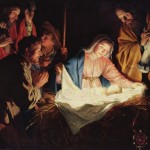
Once again, Christmas is upon us; Santa is out in full force, shopping centres are playing Bing Crosby and the ‘spirit of giving’ is in the air. You may be planning to attend the local Christmas Carols at some point. If it is a religious caroling event, the children may be dressing up as shepherds and angels; if they are the larger ‘commercial’ carols you will be more likely to see the little ones dressed as elves and reindeer. However Christmas is celebrated though, it is well and truly a season that lights up the faces of children everywhere.  

From a marketing point of view Christmas is like manna from heaven, the car parks are crowded, the food courts are full and the EFTPOS terminals are running hot. While many families, including my own, go with the ‘Kris Kringle’ method of present giving, (meaning that each adult buys for one other adult in the family), the children always receive individual presents from all the members of the family. Outranking gifts from mum and dad however are the gifts children receive from the jolly man in the red suit. Once based in the historical personage of the gift giving Saint Nicholas, from the early 20th century he has strangely morphed into a man living at the North Pole with a large team of magical elves and flying reindeer.          

How is it that Christmas has become the preeminent season for children? Is it because the true meaning of the season revolves around a little baby, that we seem to have given over Christmas to those aged under twelve? Christmas is a wonderful time for children and no one would want to take that away from them; it may even inspire children towards good behaviour throughout the rest of the year (for which parents are most probably glad). I wonder though if adults are conscious enough to allow Christmas to carry a deeper meaning for themselves and not fall into the trap of thinking that Christmas is a time for children.

Much more than being a toy party, Christmas is a season for adults and that baby in the manger has more to say to adults than anyone in primary school. The Christian story holds that the child born of Mary is actually God himself, but why would God send his Son to the earth as a child? In one sense it was probably because babies are cute and everyone puts down their defenses with children, but in a deeper sense the coming to earth as an infant indicates a level of humility and childlike trust which most adults need to strive for in pursuing God. And if course as the story reveals this baby was not to remain a baby, but, from the moment of birth he was on a trajectory towards death. Here was a child that was actually born to die. At his presentation in the temple as an infant he was recognised as one who would be responsible for the fall and rise of many and as a sign that would be rejected.

Just listen to the words of the classical Christmas Carols currently ringing out in every shopping Centre in town. One tells us to fall on our knees at the birth of the Christ child and in another we ask to be saved from Satan’s tyranny and the depths of hell! That’s right…in your local department store they are playing hymns about heaven, hell and the mysteries of salvation! And as that happens we think it is all about gift buying and children sitting on the knee of a fat man in red velvet.

More than being a season for children, Christmas is a season for adults. Christmas is about a child but it is not for children. To appreciate the depth of Christmas one must have an adult faith which is open to God’s revelation in the way that a baby is open to the care of its parents. If we overly dress up Christmas as something merely for children then we rob both children and ourselves of the depth of hope that Christmas should inspire in all of us. It is right and proper that Christmas lights up the eyes of little ones but if the birth of the saviour doesn’t also light up the eyes of their parents then it risks being no more than a party without a purpose.

Comments are closed.

Secular Society Should be Grateful for Confession

Posted: 9 December 2012

6a00d8341bfbfe53ef0120a960eace970b-320wi

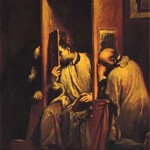
So once again we see the inner workings of the Catholic Church being dissected by an audience that has little understanding of, or care for, matters of faith. Interestingly while commentators are usually quick to point out perceived trespassing by the Church into the domain of the State, there doesn’t seem to be quite the same concern about calls for the State to come wandering into the inner sanctum of the Church. With a Royal Commission having being called into the sin of child sexual abuse, the latest target is – somewhat ironically – the very sacrament that exists to forgive sin, confession.

The criticism stems around the thousand-year-old Church law which binds priests to never disclose anything that they learn from penitents during the course of the sacrament. This confidentiality between priest and penitent is the oldest kind of confidential communication that exists. It has been upheld by priests down the ages and around the world regardless of where they may sit on the theological spectrum. It doesn’t take much logic to consider why the seal of confession is essential to the integrity of the sacrament. Without anonymity people would simply not pursue sacramental forgiveness. While some might respond ‘who cares’, the truth is confession has a greater potential for effect on the citizens of a nation than a hundred Royal Commissions.

The sacrament of confession is easily mocked, especially by those who went once as a child but never came to understand its value in the faith of an adult pursuing a life of virtue. The sacrament involves the full disclosure of serious sin to a priest who, ordained to act in the person of Jesus Christ, becomes in one sense the channel of God’s forgiveness. Now of course Father X has no more power to personally forgive sin than I have power to fly, which is why when he says “I absolve you of your sins in the name of the Father and of the Son and of the Holy Spirit” the “I” is referring to the direct forgiveness of Christ through the instrumentality of that particular priest.

For those millions of faithful who make regular use of the sacrament they can attest to its healing and strengthening capacity. From a faith perspective the healing comes from the grace of God which is reestablished in the person who has deliberately walked away from what they knew to be true and good. Confession is not as much about God ‘forgiving’ the person as it is about the person acknowledging their fault and ‘seeking forgiveness’ from God and those they wronged. If a person is presenting for the sacrament then, with true sincerity of heart, might it not be reasonable to think that they may open to dealing with whatever deeper issues lie within?

And confession is not some Catholic trick that enables a person to gain forgiveness on Monday, sin on Tuesday and roll back into the confessional on Wednesday completely unrepentant. The priest gives absolution on the basis of sincere resolution by the penitent that he will do his best – with God’s grace – to sin no more and carefully avoid occasions of sin. If someone goes into a confessional and confesses to child abuse (or any sin) with their lips but holds in their heart no genuine desire to reform their life, there is no forgiveness by God even if the words of absolution were uttered by the priest.

Those who make genuine use of this sacrament are those who are sincerely trying to better their lives and become more Christ-like in thought, word and deed. To do this requires a life change on the part of the penitent which is why the priest will give a penance. It may be some simple prayers but in the case of a more serious offence it may include instruction to seek professional help or to turn oneself over to police. An authentic confession must involve restitution made to God, people or property depending on the particular sin. Besides, what do we expect Father X to do, jump out of his side of the confessional and run in to handcuff the penitent on the other side of the grill? And if we expect priests to become law enforcement officers will they also need to report thefts and murders and the dark thoughts of those who confess they desire to inflict any sort of misery on others? 

The willingness to confess ones sins is the start of an openness to change. Secular society mistakenly thinks that genuine change will come through more police, laws and commissions. All these have their place but lasting and real reform comes though an encounter with a healing reality beyond oneself and that is confessions most powerful gift to the world.

The State should go ahead and conduct a Royal Commission – for child abuse is something that cannot be tolerated – but the sacraments of the Church should be respected for the positive role they play in offering genuine healing and the strength to pursue a better life. The failure of a few does not give the State the right to impose itself upon the Church’s sacramental system and turn priests into mandatory reporters. Such a discussion only descends into a religious bias which cares little about dealing with the real problem of abuse.

Comments are closed.

Wedding: Church or Garden?

Posted: 15 August 2012

Wedding

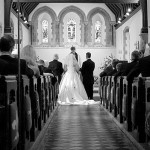
I was recently speaking to a Catholic woman whose daughter is getting married later this year. I enquired about what church the marriage was to take place in but the mother replied that while the daughter liked the look of the parish church she had opted for a garden wedding so she was able to design more of the ceremony herself. The mother didn’t seem to be aware of any concerns stemming from this decision.

Catholics leaving their parish for a scenic wedding is no longer unique. Until recently even the most distant of Catholics would appear in the parish to be hatched, matched and dispatched, that is, for their baptism, wedding and funeral. But a growing proportion of young couples are marrying ‘outside the Church’ (to use the classical phrase). Some do so because they have such little connection with their faith it makes no sense to them, others dislike the Church for one reason or another and some simply felt an outdoor wedding would be more picturesque.

While it is objectively true to state that Catholics are obliged to observe the Church’s laws on marriage, many Catholics quite simply have no idea what those laws are or what they mean. I wonder if some of the confusion comes down to a lack of understanding about the words ‘church’ and ‘Church’. In the way of a very brief explanation, ‘church’ describes the actual building where people come to pray, e.g. St Joseph’s parish church, whereas ‘Church’ refers to a grouping of Christians e.g. the Catholic Church.

When a person is baptised water is poured over their head and they are called Catholic but supernaturally they get a whole lot more than a damp head and a membership card. In baptism a person is raised up to share in God’s own life. One might use the analogy that due to inherited original sin all people are born running on low octane fuel, but in baptism a person has an engine overhaul and is filled with high octane ultra premium fuel. Now obviously when a vehicle is designed to run on high grade fuel you do not go putting in the cheapest stuff you can find. A person running a high performance vehicle does not resent that they need to use high octane fuel; they do so because they know it is what will make the car run at its optimal level. Similarly, baptism raises a person to a new level and from then they are designed to live a ‘higher’ life. It does not mean the baptised person is better than a non-baptised person but the fact is they are called to something different. Living as a Christian though does necessitate saying goodbye to low grade fuels.

For the baptised person then, not all wedding are marriages. Christ raised up marriage to the level of a sacrament meaning it became filled with specific graces that are simply not available in the natural marriage model. The higher grade model has conditions though. A person is not at liberty to simply design their own version of a wedding ceremony just as the driver of a fine car cannot roll up to any petrol station and fill up with any type of fuel. The Catholic Church offers sacramental marriage to all Catholics but it has to be conducted under the laws of the Church which primarily mean that the marriage is contracted in the presence of one of the Church’s ministers and two witnesses, and in ‘normal’ circumstances, (and if you are reading this you probably fall into the normal category), that would take place in a Catholic church building because that is the place where the faithful gather.

When a Catholic decides not to marry in ‘a church’ it usually means they are not married in ‘the Church’. This is like deciding to fill up a finely tuned Ferrari with the cheapest low grade fuel available. A Catholic might have a nice outdoor wedding ceremony but without the blessing of the Church there is no marriage. Christ offers to his Church every help and blessing but Catholics must understand this requires a certain way of living.

To marry outside the Church is a statement (deliberate or otherwise) that the specific blessings Christ offers are not required. That is why a marriage contracted outside the Church is generally not considered to be valid by the Church. This obligation for Catholics to marry within the Church is not something to be resented; rather it demonstrates what a gift and privilege the Catholic is called to. Getting married ‘in the Church’ has nothing to do with the look of the building or the person of the priest. It has everything to do with Jesus Christ and entering into a sacramental marriage with all the blessings that entails.

Comments are closed.

Is truth possible?

Posted: 5 August 2012

what is truth

I was filling in an online form recently and the security question at the end was “2+9=” and I had to type in the answer to submit the page. I found it interesting that this very mainstream form on the website of this very mainstream company was not only telling me that there was objective truth but that they actually knew what it was! If I had tried to type in that 2+9=5 I would have been told I was wrong. No message was going to appear and tell me that while they respected my freedom to believe that 2+9=5 they preferred the response to be eleven. The message would very simply say, ‘Incorrect, try again’.

I found this small incident amusing because for the most part we exist in a ‘truth free’ society where definitive statements are not welcome. Our society does of course acknowledge right and wrong but these are mostly understood to be established by the Parliament and upheld by the police. Something that is ‘right’ today can be declared ‘wrong’ tomorrow by a simple legislative adjustment. People have lost the idea that there is a genuine reality that is bigger than the law. To declare that something is right or wrong is very different to stating that something is true or untrue.

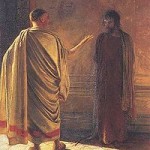
The debate over the possibility of truth is not a new phenomenon. Two thousand years ago Pontius Pilate, Prefect of the Province of the Roman Empire in Judea, had a man brought before him who claimed to bear witness to truth. Pilate is recorded as famously asking this Jesus figure, Quid est veritas, what is truth? Perhaps Pilate was genuinely asking for a response or perhaps he was stating that there was no such reality as truth. Either way, Pilate had his particular version of truth and so the rest of the story to do with Jesus is as they say…history.

Before being elected as Pope Benedict XVI, Joseph Ratzinger once stated that “Truth is not determined by the majority vote”. In other words, even if the entire world legislated and believed that 2+9=5 they would quite simply be wrong. The belief that real truth exists is the belief that there is a reality bigger than our ability to perceive or understand it.

You might have heard someone say ‘that is your truth’ or ‘this is my truth’ but we should not allow such a statement to pass unchallenged. If something is true then by its very nature it must be true for everyone. Either the words you are reading now are truly here or they are not. Their existence does not depend on you having seen or read them. We really have only two choices then: to acknowledge that some definitive truth can exist, or, to state that the idea of truth is impossible.

We live in a society that desires to create reality in response to what the majority vote wants. Euthanasia is good if enough people say it is. Same sex marriage is real if enough people say it is. Drugs can be legalised if enough people want it. Our moral and ethical code becomes not something that we strive for to make ourselves better people, but rather something that is adjusted to where we feel comfortable.

In all this, what is legal becomes the mark for what is moral and that is a dangerous path to trod. If the measure of right and wrong (and thus the standard of ‘truth’) is in the hands of a person or a political party then the only standard they have is themselves. And that has been the way on for every dictator from Julius Caesar to Pol Pot to Slobodan Milosevic. It is easy to find a very long list of dictators ranging from the benevolent to the inhumane but they share in common the notion that their truth is the truth.

When we as a ‘modern’ society decided that it would be better to live with our personal truths instead of under the one truth, we may not have realised that we handed over to anyone who wanted to take it the ideas of right and wrong. Genuine happiness however is not to be found in creating our own realities and labeling them as a truth. Happiness comes in discovering what is the truth and living our lives in accordance with that. After all, two plus nine will always equal eleven whether we like it or not.

Comments are closed.

The Stations of the Cross and the Marital Bed

Posted: 11 March 2012

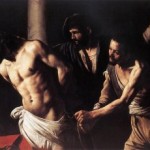
caravaggio-christ-at-the-column

This Lent, as you pray the Stations of the Cross and recall the Passion and Death of the Lord, you might add to your reflections the connection between Christ’s act of love for his bride the Church and the love of a husband and wife. The great spiritual writers have long spoken about the comparison between the Cross and the Marital Bed but in bringing it to mind again we can undergo a renewed appreciation of these two great life-giving realities.

The 10th Station recalls that after the arduous walk to Calvary, Christ is stripped of his garments. It is not often that one finds a Crucifix in which the Saviour is completely naked; we usually leave a conveniently-placed loin cloth to protect our somewhat prudish sensibilities. Let us not be confused though, Our Lord was stripped of all his garments; he hung upon the wood of the cross in the same way that he came into this world, naked. At Christmas we often speak about the humility and simplicity of the baby Jesus, but in this season we would do well to recall the utter humility which was forced upon the man Christ as he lay before his tormentors with nothing between him and them. This nakedness is not only a historical fact though. The first Adam ate from the tree of the knowledge of good and evil and he understood he was naked; his disobedience brought forth death and the feeling that his nakedness was shameful. Christ, the second Adam, would return to the tree once again, but in his nakedness he would bring forth life and redeem mankind from the curse that had been laid upon him through Original Sin. Is it not also in nakedness that a husband and wife continue to this day to overcome the sin of our first parents? Where but in the marital embrace can a man and woman experience that pure and beautiful gaze which Adam and Eve knew every day before the fall? It is in their nakedness that man and woman approach the marital bed to make of themselves a gift in the way that Christ makes himself a gift to his bride.

The 11th Station sees the Lord nailed to the Cross. We picture him writhing in agony as the long cold nails penetrate his flesh. Yet he freely took up the cross and all that it would entail. In this scene, Christ is made one with that piece of wood as much as a person could be. It is through this free and total union that life will come forth for the entire world. Christ did not go to the cross and withhold anything. He is the final lamb of sacrifice. And here too, can we not make a genuine analogy between Christ upon the marital bed of the cross and a husband and wife joined in union upon theirs? In this most intimate embrace the man and the woman are called to give completely of themselves, they share their whole bodies, including the intimate gift of their fertility, with each other and they become truly one flesh.

The 12th Station announces Christ’s death on the Cross. His last words were “It is consummated”. Everything that the life of Christ had undertaken was sealed in the act of the cross; without his death his life would have been empty. Similarly it is in the act of union between a husband and wife that their marriage is made complete. Like a wax seal pressed upon an envelope, the sexual union seals the vows made at the altar. Those vows were to love with a love that will ever be free, total, faithful and fruitful. These are the qualities of love because these are the qualities of God’s love; these are the qualities of Christ’s love from the cross. Our Lord went to his death freely; he gave himself totally to his bride to the extent that out flowed blood and water; he is every faithful to the Church and from that faithfulness flows the sacramental life. And just as Christ’s death on cross is renewed at every Mass, the wedding vows between husband and wife are renewed each time they consummate their marriage.

As we then reflect upon the Stations of the Cross this Lent, let us not only see in them a tale of woe from 2000 years ago, but rather the rich gift that they are to all people, and especially the important example they leave each married couple of the model and pattern for their own lives as an imitation of the ultimate act of love on the cross.

Comments are closed.

When Other People Let Us Down…

Posted: 27 December 2011

disappointment3

We all know people who have let us down at one time or another. Sometimes it is only in small matters and other times it is in very great matters. In recent years the media has been very vocal about priests and religious in the Church who have let us down. How can it be that those whose lives are dedicated to God fail to live out what they have promised? Should we remain in a Church where even the leaders have failed to lead with honour?

Even when Jesus Christ walked the earth he was often the target of the criticism of the Pharisees. These devout men were sincere believers but they had trouble with those who did not live the law as well as they did. When the Pharisees saw Christ eating with tax collectors and sinners they became angry, but Jesus reminded them, “those who are well have no need of a physician, but those who are sick” (Mark 2:17). In the 13th century the renowned theologian Thomas Aquinas wrote a Prayer for preparation for Mass which included the words: “I come sick to the doctor of life, unclean to the fountain of mercy, blind to the radiance of eternal light, and poor and needy to the Lord of heaven and earth”.

Too often we forget that we are actually the sick. We are the ones who need our defilement washed away, our blindness removed and our poverty enriched. The Church exists for sinners as Christ exists for sinners, and if we are beyond sin, then we are in the wrong place. For 2000 years Christians have failed to live up to their baptismal call to holiness. Some seem to fail in bigger matters, but nonetheless, we have all failed. Without diminishing the difference between serious sin and minor failings, St Paul made it clear that “there is no distinction; since all have sinned and fall short of the glory of God” (Romans 3:22-23). Because we are baptised into the one family of Christ, though, every time we sin through what we have done, and what we have failed to do, we bring harm to the whole Body of Christ. Thankfully, though, just as every sin weakens each of us, every prayer and faithful action strengthens each of us, and it was Jesus Christ who performed the great faithful action.

The whole reason Christ came was to give us his power and his grace through the cross. If we set our lives towards the cross and never take our eyes from its power we will receive all the grace we need; nothing is lacking in the sacrifice of Calvary. When we sin we need to repent but we must not despair. When we despair we cease to believe that the cross is enough to help us. Similarly when someone else sins in a serious way we can tend to despair especially if the failure comes from someone we hold in high esteem. We can too quickly become disheartened and sometimes cynical. We should acknowledge the significant hurt that comes through human sin and act to support and gain justice for any who are harmed. However, we must also remember that every person is a fallen human being and needs the restorative power of the cross.

In each of our lives there are moments, when, if seen by others, we know they would be scandalised. There are moments when we seem to be taken over by our fallen natures. Some struggle with pride, and some with lust, or gluttony, or greed. But let us not fool ourselves into thinking that we are not capable of falling as low, or lower, than other people. Our lowest moments are those times when we take our eyes from the cross; when we forget the love that Christ holds out for us.

In the face of our private sin and the public sin of others we always have two choices. The first is to harden our hearts and either despair or become like the Pharisees. The other choice – and I propose the only choice for those who are sinners – is to reject sin but to also cling ever more tightly to the cross of Christ. It is to ask the Mother of the Lord for the grace to continue to stand at the foot of the cross, and to be present (at least spiritually) when our brothers and sisters fall. And this last choice involves saying every day with the Apostles – indeed many times a day – “Lord, increase our faith” (Luke 17:5).

Comments are closed.